

HO through-station track plan: complete method, radii and turnouts
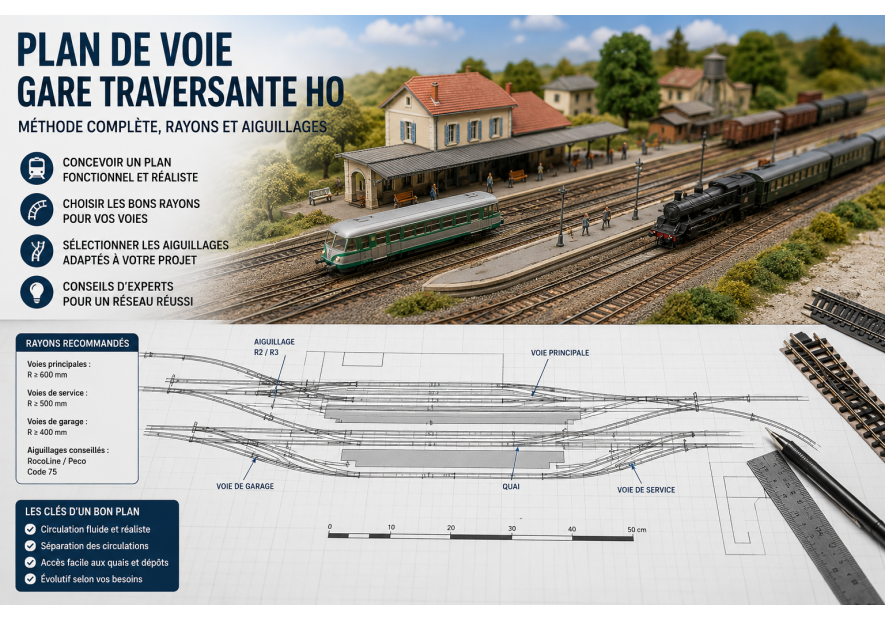
A practical method to design a reliable HO through station: geometry, usable train lengths, turnout choices, and operation logic.
Designing a robust HO through station is more than placing random tracks. A strong plan combines visual realism, operational flow, and long-term reliability.
1) Define station role first
Decide if the station is mainly for through traffic, mixed traffic, or local operations. This directly determines track count, usable lengths, and turnout layout.
2) Build geometry around consistency
Use coherent radii and smooth transitions. Avoid tight reverse curves that look acceptable on paper but create instability with long consists.
3) Usable length is your key metric
Measure your real train compositions and leave margin. If platform or passing tracks are too short, dispatching options collapse quickly during operation.
4) Choose turnouts by function
Main entry/exit routes should keep smooth diverging geometry. Compact solutions are possible in secondary areas, but not at the expense of running reliability.
Related read: Roco/Rocoline track and turnout expert guide.
5) Prepare digital and power sections early
Even on small layouts, plan feeders and future digital control paths from day one. This simplifies later upgrades with accessory decoders and automation.
6) Product-category links to build your plan
Move from concept to implementation with:
7) Final pre-installation checklist
Before permanent fixing: test all routes at low speed, inspect reverse curves, validate current pickup, and preserve maintenance access points.
To extend this workflow, read how to build your first model railway and how to choose tracks for your layout.
Bottom line: the best HO through-station plan is the one that still runs cleanly after repeated operating sessions.
Next step: signaling and block logic.
