





How to build your first model railway
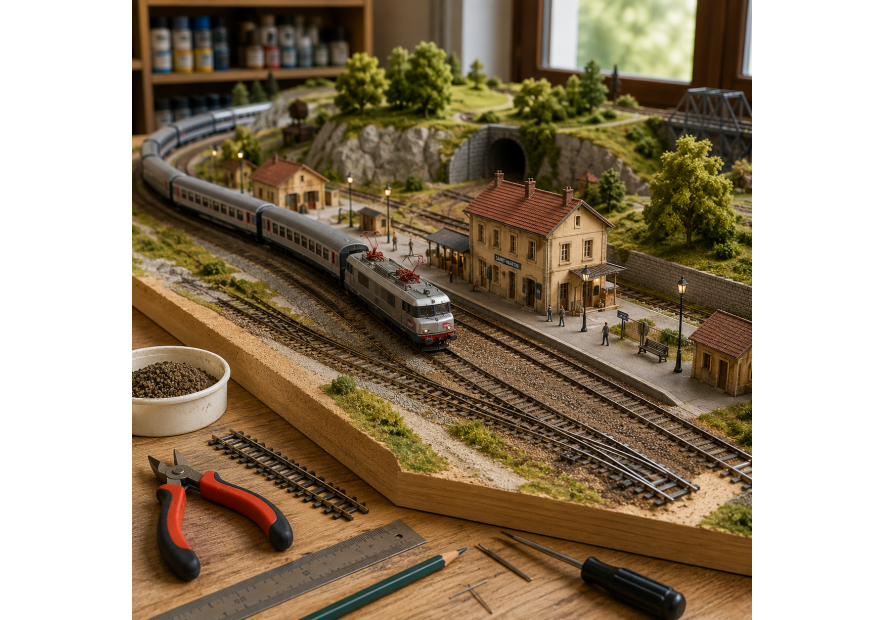
Building your first model railway is an exciting step for any model train enthusiast. Discover our tips for designing a layout that suits your space, choosing the right tracks, preparing the power supply, and creating a realistic setting that will evolve over time.
Last updated: 2026-07-23
Quick answer
To build your first model railway, start with a simple plan, a working test loop and reliable power supply before expanding with scenery.
Action summary
- Set constraints first: space, budget, scale.
- Validate electrical reliability and smooth circulation.
- Add scenery and structures after operational stability.
How to build your first model railway
Building a model railway is one of the most rewarding aspects of model railroading. Even with limited space, it's possible to create a realistic and expandable layout that will provide hours of enjoyment. Proper preparation is the key to a successful project.
Define the available space
Before buying any track, start by precisely measuring the space you have available. A bedroom, an office, or a garage can accommodate a layout, provided you adapt its dimensions to the room.
- Measure the available length and width.
- Ensure easy access to all parts of the network.
- Leave enough space for maintenance.
- Think about future expansions.
Choosing the right scale
The scale directly influences the size of the layout. For beginners, HO (1:87) and N (1:160) scales are the most popular. HO offers an excellent compromise between realism and ease of handling, while N allows for larger layouts in a smaller space.
Draw a foreground
A simple layout is often the best choice for a first network. A main loop accompanied by a siding or a small station will already allow for many running possibilities.
- Avoid overly complex designs.
- Opt for regular curves.
- Incorporate one or two service lanes.
- Reserve an area for the scenery.
Install the tracks
The quality of the track laying determines the proper functioning of the network. Take the time to align the rails correctly and check the connections before permanently fixing everything in place.
Adding switches will then allow you to diversify traffic patterns and gradually expand your installation.
Prepare the power supply
A reliable network requires a quality power supply. Whether you choose an analog or digital (DCC) system, ensure that the power supply points are properly distributed to guarantee smooth operation throughout the entire network.
Create a realistic setting
Once the trains are running, it's time to bring the network to life. Ballast, vegetation, buildings, roads, and figures transform a simple track circuit into a true miniature railway landscape.
It's not necessary to do everything immediately. Building your network gradually allows you to improve every detail over time.
Anticipating developments
One of the great pleasures of model railroading is developing your layout. You can add new tracks, install signals, automate certain movements, or integrate digital control as your experience grows.
Our advice
For your first project, keep it simple. A compact, well-built, and carefully decorated layout will provide more satisfaction than a large one built too quickly. Take your time to build step by step and fully enjoy each new improvement.
Also worth discovering
- How to get started in model railroading
- HO, N, O or Z: which scale to choose?
- Which starter kit should I choose for model railroading?
Related guides
Sources and method
- Beginner layout implementation feedback.
- Planning and wiring best practices.
- Step-by-step sequencing to avoid expensive rework.
First layout FAQ
What should I start with?
Start with a simple, realistic plan for your available space, then validate power and track operation before scenery work.
How should I plan my initial budget?
Prioritize track, power, and core rolling stock first; scenery can be improved step by step.
How can I avoid expensive mistakes?
Build in stages, test each section, and avoid freezing the final plan before critical operations run smoothly.
