



HO layout signaling: block sections, feedback, and smooth operations
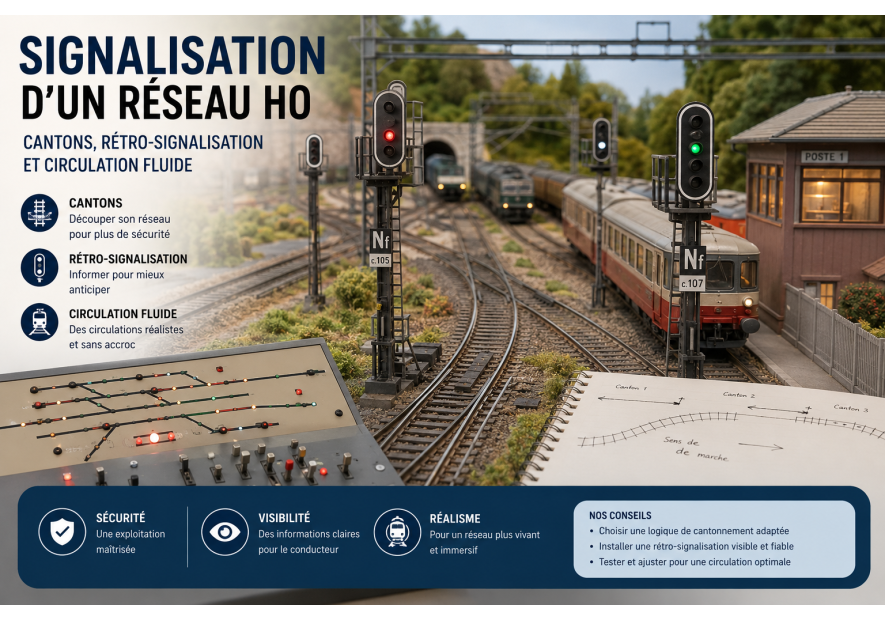
A practical method to build reliable HO signaling with block sections, train detection, and realistic route logic.
Well-designed HO signaling improves realism, safety, and operating flow. It helps avoid conflicts and supports smoother traffic management.
1. Split the layout into block sections
Blocks are your operational foundation. Each one should fit real train consists with margin to keep dispatching flexible.
2. Select a detection strategy
Feedback can use current sensing, insulated sections, or other sensor methods depending on your architecture. The key is reliable train position awareness.
3. Protect routes before release
Before authorizing movement, verify turnout positions and downstream block availability. This avoids most conflict scenarios.
4. Define traffic priorities
Passenger-first, freight windows, overtaking rules: these choices turn signaling into an operations engine, not just decoration.
5. Complementary guides to read next
To extend the workflow, read HO through-station track planning and Roco/Rocoline track and turnouts guide.
6. Product-category links
Bottom line: robust signaling makes your HO layout more reliable and much more satisfying to operate.
FAQ: HO signaling
How many block sections do I need?
Enough to separate critical areas: station entry/exit, main line, and passing logic.
Is feedback detection mandatory?
For smooth multi-train operations, it is strongly recommended.
Can I start small and scale later?
Yes, if feeder planning and section logic are anticipated from day one.
