

- Out-of-Stock

Mon-Fri: 9:00 am - 6:00 pm
Sat: 9:00 am - 4:00 pm
Sun: 9:00 am - 2:00 pm
8-100-9000-300
demo@demo.com27 Oak Street, Tenafly, US, 07670
Free delivery all orders of $120 or more of eligible items across any product category qualify
Credit Card: Visa, MasterCard, Maestro, American Express
You can return any item purchased within 16 days of the delivery date
 By buying this product you can collect up to 38 points. Your cart will total 38 points that can be converted into a voucher of €0.76.
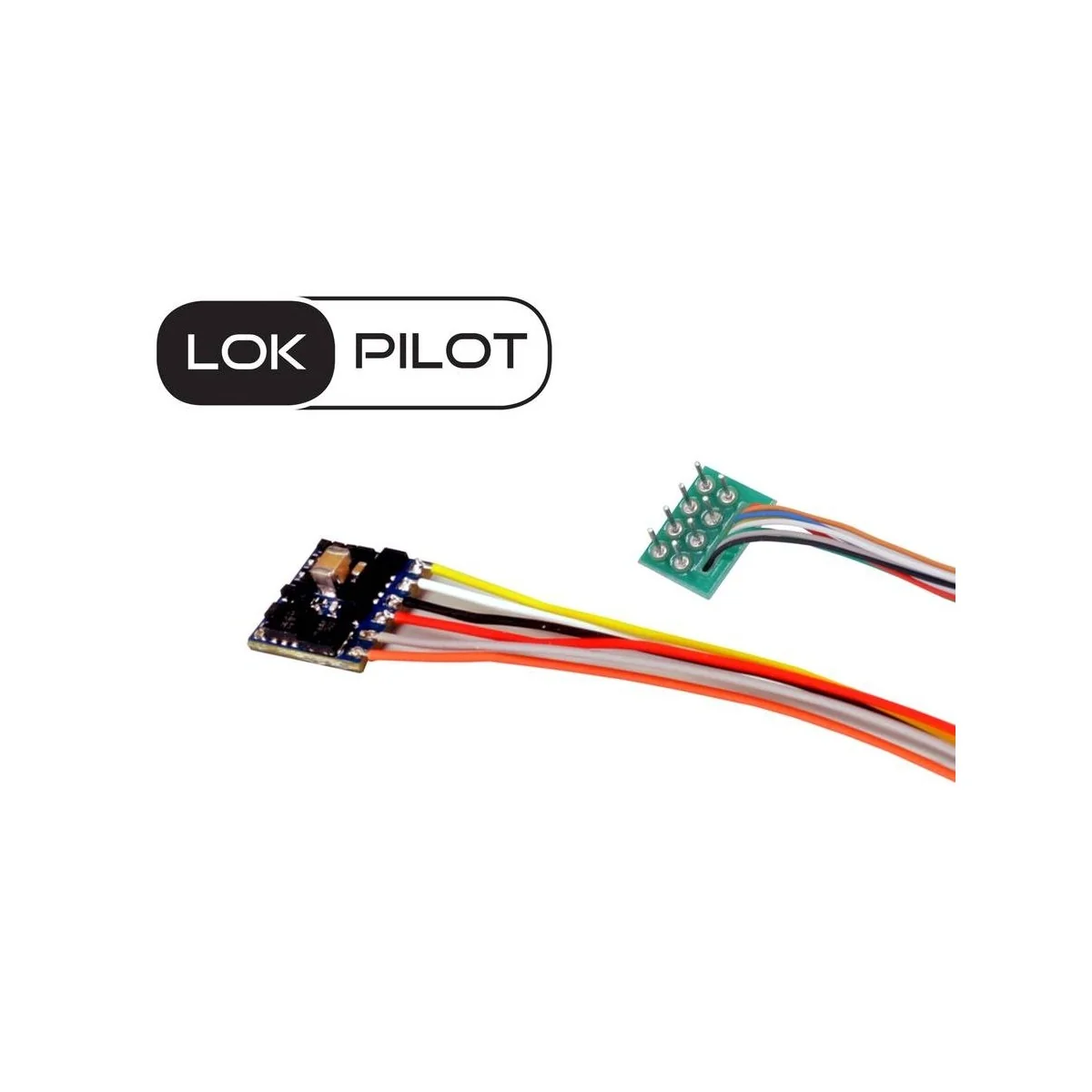
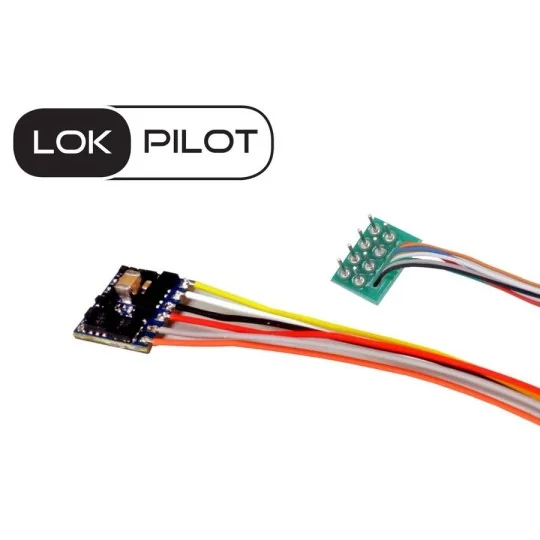
ESU LokPilot V5 Micro locomotive decoder with 8-pin NEM 652 connector. Compatible with DCC/MM/SX, it is suitable for N and TT scales and offers a motor current of 0.75 A in a compact format.
LokPilot mirco decoder 8 Pin, NEM652 V5.0 DCC/MM/SX
Brand: ESU
Reference: 59810
Scale: N / TT
> Connector: 8-pin NEM 652
Motor current: 0.75 A
> Dimensions: 8.0 x 7.0 x 2.9mm
The LokPilot 5 micro is ESU's smallest digital decoder to date. Thanks to the use of miniature components, 8-layer printed circuit boards, and the latest manufacturing technology, it is so small—just 8.0 mm x 7.0 mm and only 2.4 mm thick (2.9 mm at the capacitor)—that it can be used even in very small locomotives. It can accommodate Z, N, or TT gauge layouts. Nevertheless, functionality and robustness have not been compromised compared to the larger versions.
The LokPilot 5 micro decoders are available with all common interfaces. The versions with the Next18 or PluX16 interface are slightly larger with a base area of 13.0 mm x 9.2 mm, but they also support the mfx®-compatible M4 protocol.
The modes :
The LokPilot 5 micro is a true multi-protocol decoder. It supports the DCC data format as well as Motorola®, Selectrix®, and M4. In DCC format, 14 to 128 speed steps are as intuitive as 2- and 4-digit addresses, and up to 32 functions are supported. Thanks to RailComPlus®, the decoders connect fully automatically to a suitable digital control center.
It supports all DCC programming modes and, thanks to RailCom®, CV values on the main track can be read with compatible control centers. Auxiliary registers are available for control centers that can only program CVs from 1 to 255.
Motorola® users benefit from up to 28 speed steps with 255 addresses. Three additional Motorola® addresses enable the activation of 16 functions. A built-in programming mode also allows reprogramming with the venerable Control Unit 6021.
The Next18 and PluX16 variants also allow automatic registration in compatible mfx® control centers via the M4 protocol. All 32 possible function keys are available.
The LokPilot 5 micro decoder recognizes Märklin® braking sections as well as ZIMO® HLU/ZACK controls or the Lenz® ABC system. Braking with DCC brake modules or with DC voltage is also possible. It can also stop with a Selectrix® brake diode. An automatic ABC shuttle train allows for automatic movement between two stations.
The LokPilot 5 decoder can be used on analog DC networks. The maximum speed can be set separately.
The decoder switches between operating modes fully automatically "on the fly".
Features :
We know you want your locomotives to be as realistic as possible. Therefore, we've equipped the LokPilot 5 micro decoder with an incredible number of function outputs. The 6- or 8-pin wiring harness variants offer four amplified function outputs, each with a 180mA output current, and two logic-level outputs. Versions with the Next18 or PluX16 interface have a total of six amplified outputs and two logic-level outputs available. All major lighting effects are included, and the brightness of each output can be adjusted independently. The decoder handles automatic push and pull when uncoupling ROCO®, Krois®, and Telex® couplers.
Engine control:
The motor control of the LokPilot 5 DCC micro decoder has been fundamentally improved once again. A variable, adjustable PWM clock frequency from 10 kHz to 50 kHz ensures super-quiet operation, especially with bell-type motors. The typical "buzz" is a thing of the past. The load control now has up to 10 CVs that can be adjusted for challenging applications. The unique "Autotune" function allows for automatic calibration of the decoder to the motor. The LokPilot 5 DCC decoder provides up to 0.75 A of motor current—enough power for most motors.
Security :
A PowerPack allowing bypassing dirty tracks can be installed on the LokPilot 5 micro.
Of course, the motor output and function outputs are protected against overload. We want you to enjoy your decoder for as long as possible.

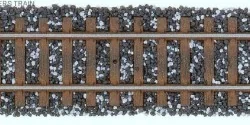
Busch 7124 track ballast, black/grey colour, suitable for HO scale 1/87. 230g pack for creating railway scenery and dioramas.
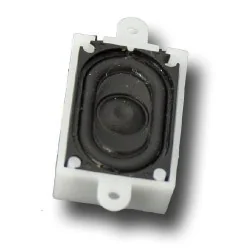
ESU 50330 16 x 25 mm speaker, 4 Ohm impedance, with included resonance chamber. Accessory compatible with LokSound V4 and LokSound Micro V4 decoders.