


Mon-Fri: 9:00 am - 6:00 pm
Sat: 9:00 am - 4:00 pm
Sun: 9:00 am - 2:00 pm
8-100-9000-300
demo@demo.com27 Oak Street, Tenafly, US, 07670
Free delivery all orders of $120 or more of eligible items across any product category qualify
Credit Card: Visa, MasterCard, Maestro, American Express
You can return any item purchased within 16 days of the delivery date
 By buying this product you can collect up to 79 points. Your cart will total 79 points that can be converted into a voucher of €1.58.
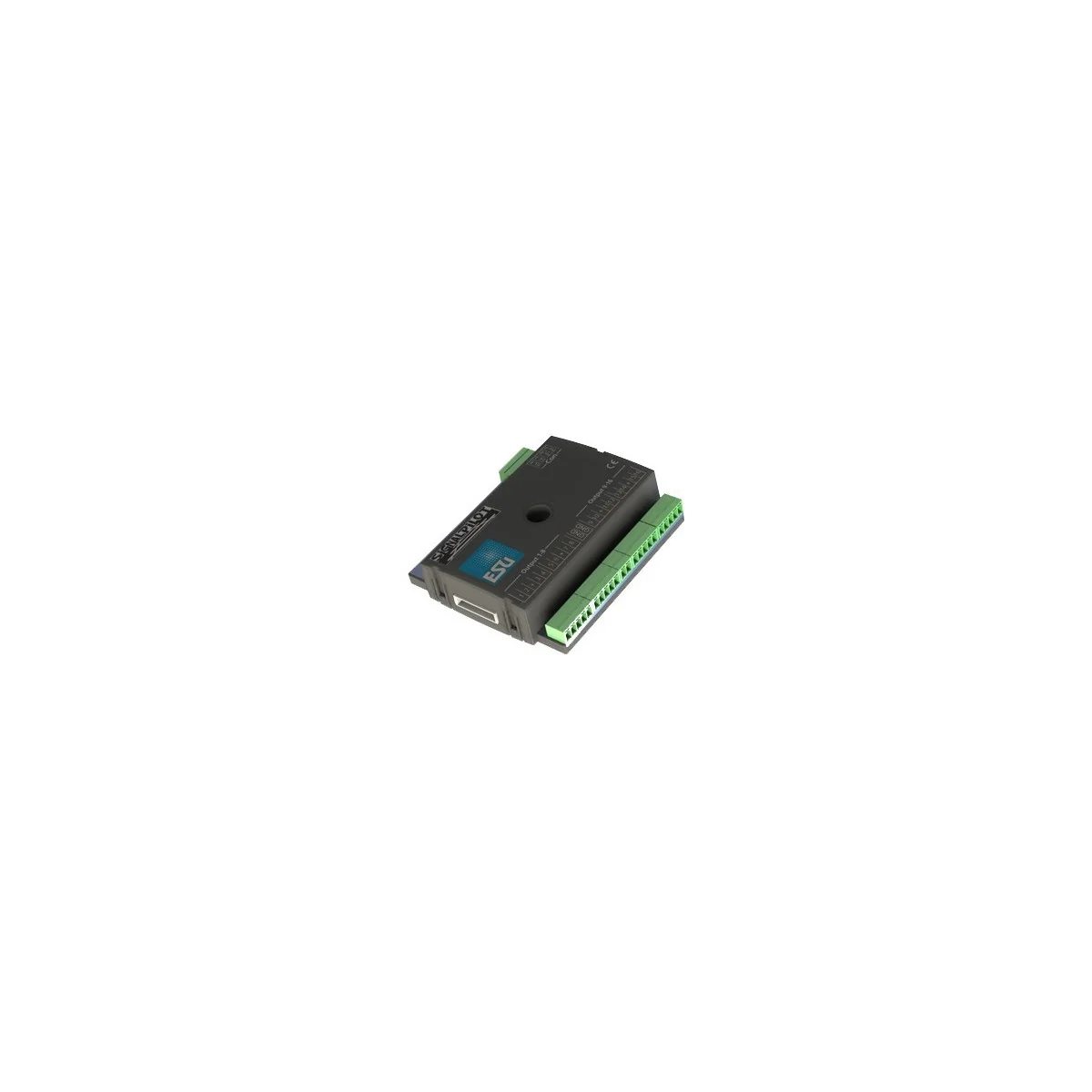
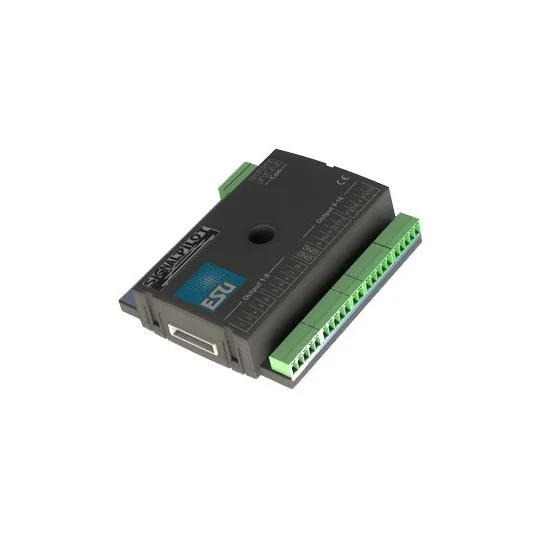
ESU SignalPilot 51840 signal decoder for HO layouts operating on 2-rail DCC/MM. This multi-protocol decoder is designed for controlling light signals and has 16 outputs for LEDs or micro lamps, with configuration via ESU LokProgrammer.
between 16 Sep and 23 Sep with Colissimo Domicile €17.90
Characteristic :
Brand: Esu
Ref: 51840
Scale: HO
> Operation: 2 DCC/MM rails
The ESU SignalPilot decoder is a multi-protocol decoder designed primarily for switching daylight signals. It has 16 outputs to which micro-lamps or LEDs (with series resistors) can be directly connected. Since all outputs are designed as push/pull output stages, daylight signals with a common anode as well as those with a common ground connection (common cathode), such as Viessmann® signals, are suitable. Motorized semaphore signals and turnout drives can also be used with the SignalPilot.
Operating modes
The SignalPilot supports both DCC with RailComPlus® and Motorola®. Programming allows you to assign each output to any address or combination of addresses.
Functionality
The SignalPilot can be powered either directly by the digital controller or by any transformer/power supply providing DC or AC power. The SignalPilot features 16 transistor outputs in a push-pull configuration. Each output can be used individually as continuous light, flashing light, or pulsed light. The brightness or flashing frequency can be adjusted, as well as the fade-in and fade-out times. Various prototype lighting effects, such as soft dimming, fluorescent tube effect, faulty fluorescent tube effect, gas lantern simulation, and flickering light, ensure a realistic result. Randomly controlled on/off and a delay on/off function can also be activated. A night duty extension can dim all outputs together if desired.
The SignalPilot outputs are combined into signal aspects during configuration. In principle, signals with two, three, four, or more spectra are possible. Depending on the number of outputs involved, one or more switch numbers (accessory addresses) are assigned to each signal, which can then be used to change the different signal aspects. Up to 16 switch numbers are available for this purpose.
The signal aspects are configured exclusively using the ESU LokProgrammer software. You select the desired signal aspects, then write them to the decoder, and finally wire the signals as configured.
All aspects of the signal predefined in the LokProgrammer software can be individually modified. The description of the signal aspects themselves is done using XML files, which are either regularly expanded by ESU or can be created and expanded by you at your discretion. In this way, even "exotic" signals can be supported. The SignalPilot is multi-protocol compatible and can be used with digital control stations operating with the Märklin® Motorola® system (e.g., 6021, Central Station®, or Mobile Station®) as well as with DCC-compatible control stations. Configuration can be performed via Programming on the Main (POM) and on the programming track. CVs can also be read using RailCom®.
Optionally, a SwitchPilot expansion relay module can be connected to the SignalPilot. This simplifies the implementation of brake chapters or the biasing of the turnout control.
LokProgrammer
The easiest way to configure the SignalPilot is to program it with ESU LokProgrammer. Simply choose the desired signal type and the wiring will be displayed on the screen.
Designed with future developments in mind.
The SignalPilot firmware can be updated at any time using the LokProgrammer. This may be necessary whenever new signal types are added.

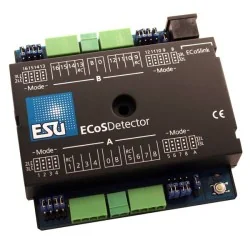
ESU ECoSDetector 16-input feedback module, including 4 RailCom-compatible inputs. Connection via ECoSlink bus to an ECoS control unit, with advertised compatibility with updated Central Station. Suitable for HO 2-rail DCC/MM layouts.
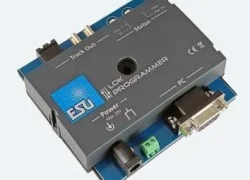
The ESU LokProgrammer allows you to program, load, and configure your decoders from a Windows PC via USB. It comes with a power supply, serial/USB cable, and a downloadable French manual.
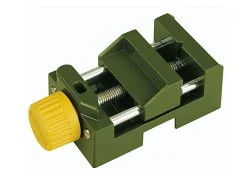
MS 4 - MICROMOT machine vise with 50 mm jaws for TBM, MB 140/S and MB 200 - 28132 Made of cast aluminum.

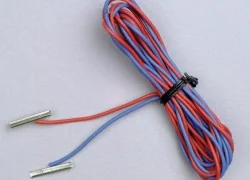
ESU 51943 red wiring wire, 10 meters long, for model railway layouts and installations. Suitable for HO and N scales.